



How user behavior affects SEO rankings is shown through signals like CTR, dwell time, bounce rate, and engagement. Understanding these factors helps improve content performance, increase visibility, and achieve higher search engine rankings effectively.
How user behavior affects SEO rankings comes down to engagement signals—clicks, dwell time, and bounce rate—that show search engines whether your page truly satisfies searchers.
How user behavior affects SEO rankings is one of the most important topics in modern search. Search engines no longer rely on keywords and backlinks alone. They now evaluate how real users interact with your pages, using those behavioral signals to determine which results deserve higher positions in search rankings.
Every click, scroll, hover, and back-button action sends a message to search engines. When users find content helpful, they stay longer, explore more pages, and engage with the material. When they don’t find value, they quickly return to search results. Over time, these patterns strongly influence how content is ranked and whether it continues to appear in top positions.
This guide breaks down exactly how how user behavior affects SEO rankings in practice. You’ll learn which behavioral metrics matter most, how search engines interpret user interaction data, and what strategies you can use to improve them. We’ll explore click-through rate (CTR), dwell time, bounce rate, session duration, mobile usability, and the growing impact of AI-powered search systems.
In addition, you’ll discover how content structure, page experience, and intent matching all contribute to better engagement signals. Even small improvements—such as clearer headings, faster loading pages, and more engaging introductions—can significantly improve how users interact with your site.
By the end, you’ll have a clear, actionable framework to turn user engagement into stronger SEO performance and sustainable rankings. Understanding how user behavior affects SEO rankings will help you create content that not only attracts visitors but also keeps them engaged and satisfied.
What is user behavior in SEO?
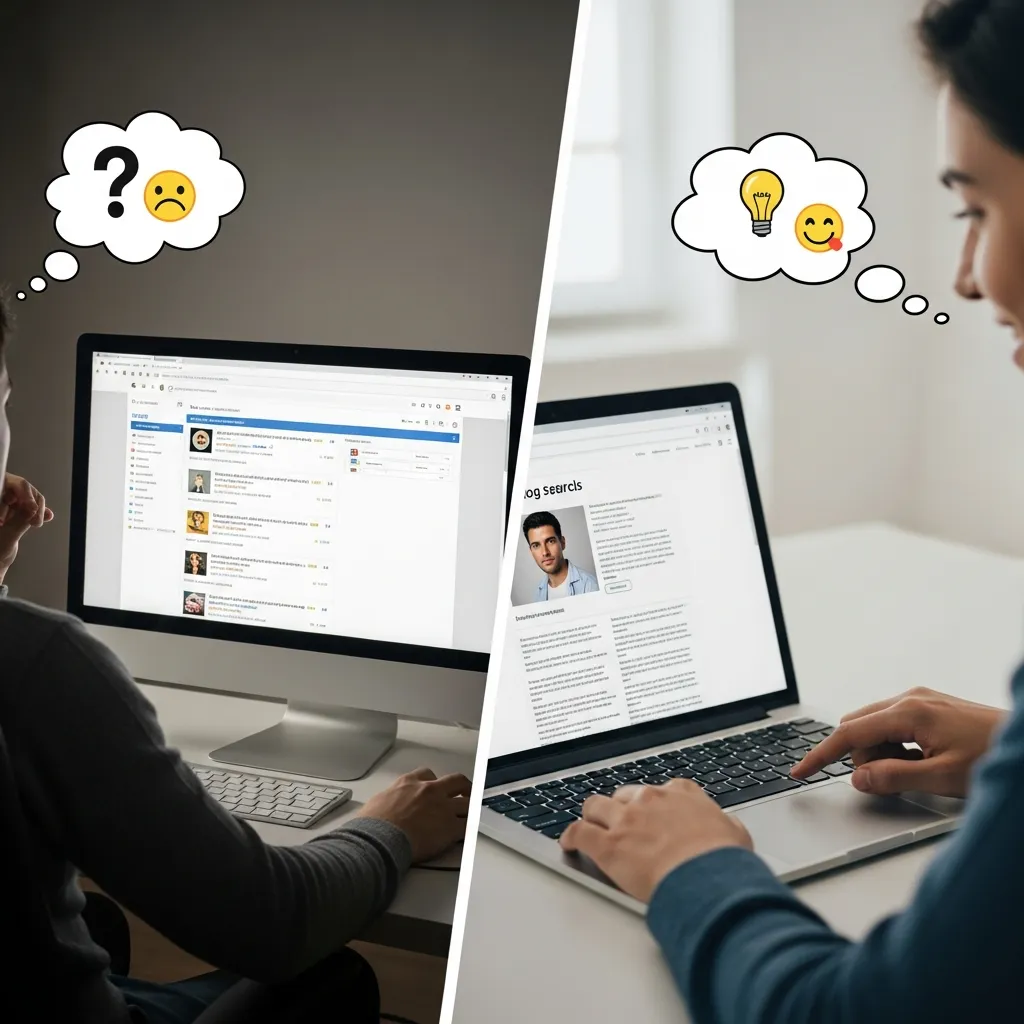 User behavior in SEO refers to how visitors interact with your website after they find it in search results. This includes whether they click your listing, how long they stay, how many pages they visit, and whether they return to the search results to try another link.
Search engines treat these actions as quality signals. A page that keeps users engaged suggests strong, relevant content. A page that pushes users away quickly suggests a poor match for the query.
Google has been careful about how it describes these signals publicly. Still, systems like RankBrain and the Helpful Content framework clearly reward content that satisfies real people. Understanding how user behavior affects SEO rankings starts with knowing which behaviors search engines can measure.
Which user behavior metrics matter most for SEO?
Several behavioral metrics shape your search performance. The most influential ones include:
- Click-through rate (CTR): The percentage of searchers who click your result.
- Dwell time: How long a user stays on your page before returning to search results.
- Bounce rate: The share of visitors who leave after viewing only one page.
- Pages per session: How many pages a single visitor explores.
- Return visits: Whether users come back to your site directly.
Each metric tells a different part of the story. Together, they paint a clear picture of whether your content delivers real value.
How does click-through rate affect SEO rankings?
Click-through rate is often the first behavioral signal a search engine sees. When your page appears in results, Google measures how many people choose your link over the competition.
A high CTR suggests your title and description match what searchers want. A low CTR—especially for a page ranking near the top—signals a possible mismatch. Over time, consistently strong CTR can reinforce your position, while weak CTR may invite a slow decline.
Your title tag and meta description do the heavy lifting here. A compelling, benefit-driven snippet pulls the eye and earns the click. To sharpen this skill, our SEO title psychology guide breaks down the exact cognitive triggers that make people click. Pair it with a strong meta description optimization strategy to turn rankings into actual traffic.
How can you improve your click-through rate?
Boosting CTR is one of the fastest ways to influence how user behavior affects SEO rankings. Try these proven tactics:
- Write benefit-led titles. Tell readers what they’ll gain, and keep titles under 60 characters.
- Use numbers and power words. Specific figures like “47%” signal value and structure.
- Add brackets or the current year. Tags like “(2026 Guide)” stand out in crowded results.
- Match the search intent. Align your snippet with why people are searching in the first place.
- Test and refine. Use Google Search Console to find high-ranking pages with low CTR, then rewrite them.
For more tactics, explore these 7 proven strategies to increase Google CTR.
How does dwell time influence search rankings?
Dwell time measures how long a visitor stays on your page before clicking back to the search results. It sits between CTR and bounce rate as a strong indicator of content quality.
Imagine someone clicks your result, reads for five minutes, then closes the tab satisfied. That long dwell time tells search engines your content answered the query well. Now imagine they click, scan for three seconds, then hit the back button. That short visit—often called “pogo-sticking”—signals the opposite.
Longer dwell time generally correlates with better rankings because it reflects genuine engagement. The goal isn’t to trap users on the page, though. It’s to give them exactly what they came for, then keep them reading because the content is genuinely useful.
What keeps users on your page longer?
To extend dwell time and strengthen how user behavior affects SEO rankings, focus on substance and structure:
- Answer the question fast. Lead with a direct answer near the top of the page.
- Break up the text. Use short paragraphs, clear headings, and bullet points.
- Add visuals. Images, charts, and videos hold attention and explain complex ideas.
- Write for clarity. Aim for readable sentences a 13-year-old could follow.
- Link to related content. Guide readers deeper with helpful internal links.
According to Search Engine Journal, pages that format educational content with clear subheadings and lists tend to keep readers engaged far longer than dense walls of text.
How does bounce rate impact your SEO performance?
 Bounce rate is the percentage of visitors who land on a page and leave without taking further action. A high bounce rate isn’t always bad—sometimes a user finds a quick answer and leaves happy. But when paired with short dwell time, it usually signals trouble.
Search engines interpret a fast bounce back to the results page as a sign your content missed the mark. If most visitors leave within seconds, Google may conclude your page doesn’t deserve its ranking.
The fix lies in matching expectations. When your title promises a complete guide, the page must deliver one. Misleading snippets might win the click, but they trigger instant bounces that damage long-term rankings. Honesty beats hype every time.
When is a high bounce rate actually fine?
Not every bounce signals a problem. Consider context:
- Quick-answer pages. A user who finds a phone number or definition leaves satisfied.
- Single-purpose content. Some pages exist to answer one thing and need no further clicks.
- Strong dwell time. A long visit followed by a bounce often means the content did its job.
Choose to worry about bounce rate when it pairs with short dwell time. That combination points to an intent mismatch worth fixing.
How does search intent connect user behavior to rankings?
Search intent is the reason behind every query—and it’s the thread connecting all behavioral signals. When your content matches intent, users engage. When it doesn’t, they bounce.
A user searching “how to fix a leaky faucet” wants a tutorial, not a plumbing service sales page. Serve the wrong content, and behavioral metrics tank. Serve the right content, and dwell time climbs while bounce rate falls.
This is why intent alignment sits at the heart of how user behavior affects SEO rankings. Search engines reward pages that satisfy the underlying goal, not just the literal keywords. Our search intent optimization guide maps the right content to each stage of the buyer journey, helping you match intent every time.
How do you match content to user intent?
Aligning content with intent improves every behavioral metric at once. Here’s how:
- Analyze the SERP. Study the top results to see what format Google rewards for that query.
- Identify the intent type. Determine whether the search is informational, navigational, commercial, or transactional.
- Choose the right format. Use guides for learning, comparisons for research, and product pages for buying.
- Deliver fully. Cover the topic completely so users don’t need to look elsewhere.
For a deeper framework, see how improving rankings with user intent transforms SEO performance.
How does mobile and page experience affect user behavior?
Page experience shapes behavior before users even read a word. Slow load times, clunky layouts, and intrusive pop-ups push people away fast—driving up bounce rate and crushing dwell time.
Google’s Core Web Vitals measure key experience factors like loading speed, interactivity, and visual stability. Since most searches now happen on mobile, a smooth mobile experience is non-negotiable. A page that takes five seconds to load on a phone loses a large share of visitors before they engage at all.
Better page experience leads to better behavioral signals, which in turn supports stronger rankings. Speed, simplicity, and mobile readiness form the foundation of how user behavior affects SEO rankings today.
What page experience factors matter most?
Focus on these elements to keep users engaged:
- Loading speed. Aim for pages that load in under three seconds.
- Mobile responsiveness. Ensure text, buttons, and images adapt to small screens.
- Visual stability. Prevent content from jumping around as the page loads.
- Clean design. Avoid aggressive pop-ups that frustrate visitors.
How does AI-driven search use user behavior?
AI search has changed how behavioral signals get used. Tools like Google’s AI Overviews and ChatGPT pull fact-dense, self-contained answers from authoritative pages—and they favor content that real users find genuinely helpful.
When your content earns strong engagement, it signals authority and relevance to both traditional search and generative engines. AI systems construct answers by extracting clear, quotable statements from trusted sources. Pages with high engagement and well-structured content stand a better chance of being surfaced or cited.
To prepare for this shift, write clear, self-contained sentences that name your subject directly. Add answer-first summaries near your headings, and frame subheadings as the questions people actually ask. These habits help AI systems understand your content while keeping human readers engaged.
How do you turn user behavior into better rankings?
 Improving how user behavior affects SEO rankings comes down to one principle: serve the user first. Every behavioral signal—CTR, dwell time, bounce rate—reflects whether you’ve met that goal.
Start by auditing your top pages in Google Search Console. Find pages that rank well but earn low CTR, then rewrite their titles and descriptions. Next, identify pages with high bounce rates and short dwell times—these likely suffer from intent mismatches or weak content. Improve them by adding direct answers, clearer structure, and helpful visuals.
Then go deeper. Speed up your pages, optimize for mobile, and link related content together to keep users moving through your site. Small, consistent improvements compound over time into stronger engagement and higher rankings.
The websites that win in search are the ones that obsess over user satisfaction. Give people exactly what they came for, make the experience effortless, and search engines will reward you. Make the changes today—your rankings are waiting to climb.
Conclusion:
Understanding how user behavior affects SEO rankings is essential for improving search performance. Search engines analyze user signals such as click-through rate, time on page, bounce rate, and engagement to evaluate content quality and relevance.
By focusing on better content, improved readability, faster loading speed, and a strong user experience, you can positively influence these signals. When users stay longer and interact more, it sends strong quality signals to search engines.
Ultimately, optimizing how user behavior affects SEO rankings is not just about algorithms—it is about creating valuable experiences that naturally lead to higher visibility, better engagement, and stronger SEO results.
Frequently Asked Questions
1. Does user behavior directly affect Google rankings?
User behavior influences rankings, though the relationship is partly indirect. Signals like click-through rate, dwell time, and engagement help search engines judge content quality, which can lift or lower your position over time.
2. What is the most important user behavior metric for SEO?
There’s no single metric that matters most. Click-through rate, dwell time, and bounce rate work together to show whether your content satisfies searchers. Strong performance across all three supports better rankings.
3. How does bounce rate affect SEO rankings?
A high bounce rate paired with short dwell time signals that your content may not match user intent. This can hurt rankings. However, a bounce after a long, satisfied visit is usually fine.
4. Can improving click-through rate boost my rankings?
Improving click-through rate can strengthen your search performance. A higher CTR signals relevance to search engines and brings more traffic, both of which support stronger positions over time.
5. What is dwell time, and why does it matter?
Dwell time is how long a user stays on your page before returning to search results. Longer dwell time suggests your content is engaging and relevant, which can positively influence rankings.
6. How does mobile experience affect user behavior and SEO?
A poor mobile experience drives users away quickly, increasing bounce rate and reducing engagement. Since most searches happen on mobile, fast, responsive pages are essential for strong behavioral signals.
7. How can I reduce my website’s bounce rate?
Match your content to search intent, lead with a direct answer, improve page speed, break up text with headings, and add helpful visuals. These steps keep visitors engaged longer.
8. Does search intent influence user behavior signals?
Search intent is the foundation of user behavior. When your content matches what users want, they engage more. When it doesn’t, they bounce—directly affecting your behavioral metrics.
9. How long does it take to see ranking changes from better user behavior?
Ranking changes from improved user behavior typically take several weeks to a few months. Search engines need time to collect enough engagement data to reassess your page’s quality.
10. How does AI search use user behavior signals?
AI-driven search favors content that real users find helpful. Strong engagement signals authority and relevance, increasing the chance your content gets surfaced or cited in AI-generated answers.