

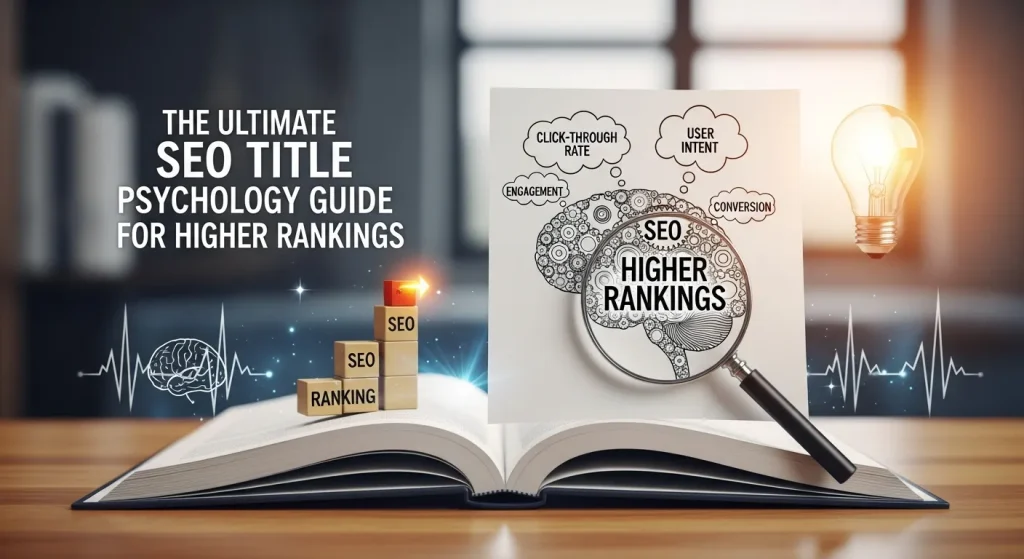
An SEO title psychology guide explains how to craft compelling headlines that attract clicks and improve rankings. It focuses on emotional triggers, user intent, and search behavior to create optimized titles that boost visibility, engagement, and organic traffic.
An effective seo title psychology guide teaches marketers to blend search engine optimization with human behavioral triggers. By leveraging curiosity, urgency, authority, emotion, and self-interest, businesses can craft title tags that satisfy algorithm requirements while compelling users to click, ultimately driving higher organic traffic and improving overall search visibility.
The words you choose for your webpage titles hold immense power over your digital success. A search engine optimization title does much more than signal topic relevance to algorithms like Google or Bing. It serves as the primary gateway between a searcher’s problem and your website’s solution. Understanding how human beings react to specific words, structures, and emotional triggers can drastically supercharge your SEO titles, transforming standard search impressions into highly qualified website visitors.
This comprehensive seo title psychology guide will explore the exact cognitive triggers that prompt users to click. You will discover how to weave keywords seamlessly into compelling headlines, how to align your titles with specific buyer personas, and how to measure your success using data-driven metrics. By applying these psychological principles, your content will stand out in crowded search engine results pages and attract the audience your business deserves.
In addition, a well-structured seo title psychology guide helps marketers understand the balance between readability and optimization. Overstuffing keywords may harm performance, while strategically placed primary keywords improve both ranking and click-through rates. Successful SEO titles often combine power words, numbers, and emotional cues to increase user engagement and improve visibility across competitive search results.
Modern search engines also prioritize user intent, making it essential for titles to reflect what users are actually searching for. By aligning your seo title psychology guide strategy with informational, navigational, and transactional intent, you can ensure your content reaches the right audience at the right stage of their journey.
Ultimately, mastering a seo title psychology guide allows businesses to turn simple metadata into a powerful marketing tool. When used correctly, optimized titles not only improve rankings but also significantly increase engagement, conversions, and long-term organic growth.
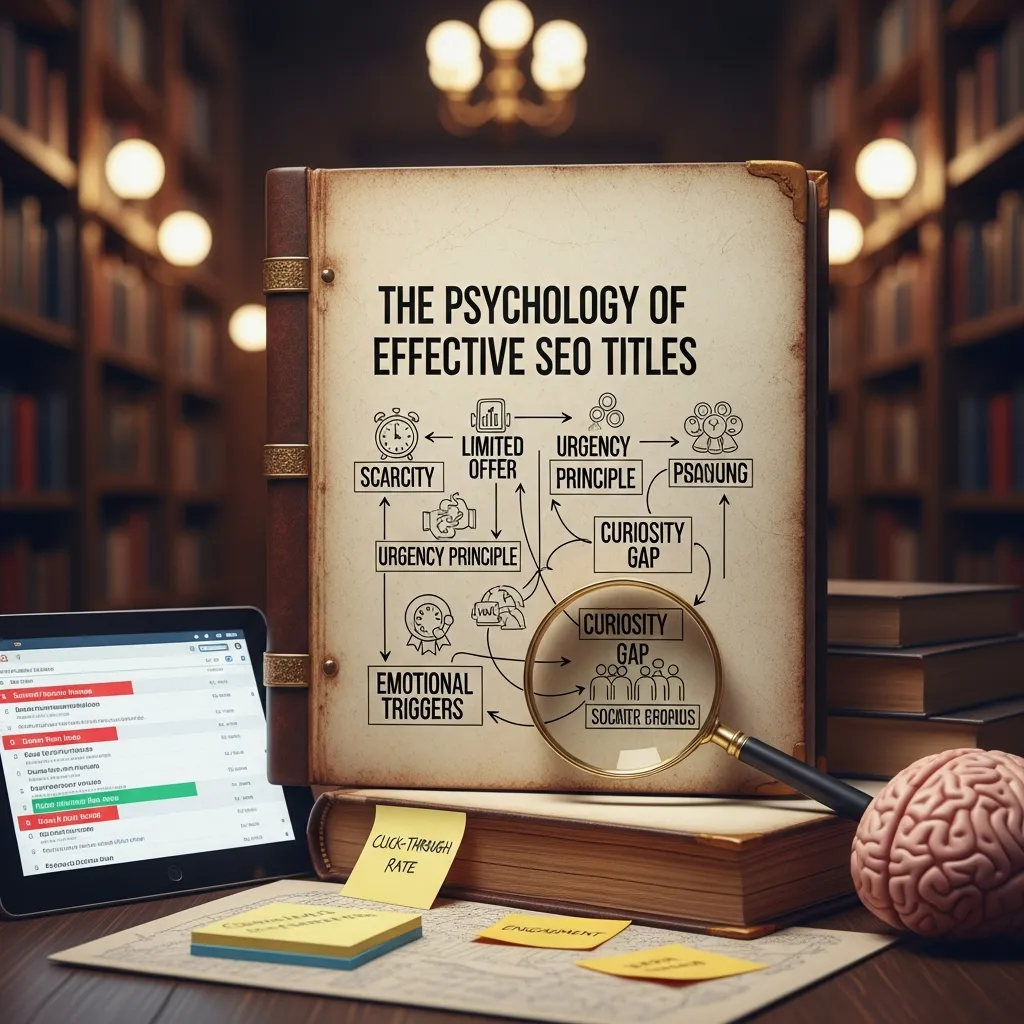 To create headlines that consistently drive traffic, marketers must understand the cognitive biases that influence decision-making. Searchers scan results rapidly, making split-second choices based on deeply ingrained psychological responses. A strong seo title psychology guide helps translate these behaviors into practical headline strategies that improve click-through rates and organic visibility.
 Understanding human psychology is only the first phase of the process. You must systematically apply these psychological principles to your title creation workflow to ensure consistent results.
How do you integrate keywords beyond basic stuffing?
Keyword integration remains a fundamental requirement for search engine algorithms, but modern SEO requires nuance. Stuffing a title with unnatural keyword variations actively repels users and triggers algorithmic penalties.
Instead, focus on semantic SEO and user intent. Search engines understand the contextual meaning behind queries. Your SEO title should incorporate the primary keyword naturally while matching the searcher’s underlying goal. For a deeper understanding of how to align your content with user goals, reviewing a search intent optimization guide provides excellent foundational knowledge.
How do you understand your audience’s psychology?
Different audiences respond to different psychological triggers. To maximize your click-through rates, you must intimately understand your specific buyer personas and their unique pain points.
A technical audience might value authority and data-driven insights, responding well to titles that mention specific metrics or advanced methodologies. Conversely, a beginner audience might feel overwhelmed by technical jargon and respond better to titles promising simplicity and ease of use. Take the time to map your titles to the distinct preferences of your target demographic. This targeted approach is a core component of a successful intent-based keyword research strategy.
How do you A/B test your titles for maximum impact?
Search engine optimization is an iterative process. You cannot assume your first title will be the most effective. A/B testing allows marketers to compare different psychological triggers against real-world user behavior.
Utilize tools like Google Search Console to monitor the performance of your pages. If a page ranks well but receives very few clicks, the title is failing to persuade the user. Change one variable—such as swapping a curiosity-based title for an urgency-based title—and track the results over several weeks. Continual testing is one of the most reliable ways to increase Google CTR and maximize the value of your existing organic rankings.
What is the art of conciseness and clarity in title creation?
Search engines display a limited number of characters in the search results. If your title exceeds approximately 60 characters, Google will truncate it, cutting off your carefully crafted psychological triggers.
Clarity must always take precedence over cleverness. Ensure the most important words, including your primary keyword and core benefit, appear at the beginning of the title. A concise, front-loaded title ensures the user grasps the value proposition instantly, regardless of the device they use to conduct the search. According to research from Moz, keeping titles under 60 characters ensures optimal display across the vast majority of search engine results pages.
What advanced techniques enhance your seo title psychology guide?
As you refine your approach to title creation, advanced tactics can provide a significant competitive advantage in crowded search landscapes.
How does utilizing numbers impact user behavior?
Numbers are incredibly effective at capturing attention. The human brain naturally gravitates toward specific figures because they promise structure, predictability, and easily digestible information.
Using odd numbers in listicles often outperforms even numbers, as they appear more authentic and less manufactured. Furthermore, specific data points—such as “Increase Traffic by 47%”—carry more psychological weight than vague claims like “Increase Traffic Significantly.” By integrating precise numbers into your titles, you provide a clear expectation of the content’s format and value, which directly supports strategies for improving rankings with user intent.
How do brackets and parentheses influence click-through rates?
 Adding brackets or parentheses to an SEO title acts as a powerful visual interrupt that helps your listing stand out in crowded search engine results. When users scan multiple similar-looking results, the distinct structure of brackets or parentheses naturally draws attention and improves readability. This small formatting change can significantly influence click-through rates by making your title feel more structured, informative, and trustworthy.
From a seo title psychology guide perspective, punctuation is not just decorative—it is a strategic psychological tool. Brackets can highlight bonus value, content type, or updates, while parentheses can add clarification or reassurance. For example, immediately signals freshness and relevance, while “(Includes Free Template)” adds perceived value before the user even clicks. These signals reduce uncertainty and increase perceived reward.
Additionally, brackets and parentheses help communicate user intent alignment more clearly. Searchers often skim results quickly, and anything that reduces cognitive effort improves engagement. When users instantly understand what they will gain—such as a guide, checklist, case study, or updated resource—they are more likely to click your result over competitors.
In competitive niches, this technique becomes even more effective. A well-optimized seo title psychology guide often recommends combining brackets with power words, numbers, or emotional triggers to maximize visibility. This layered approach strengthens both visual appeal and psychological persuasion.
Ultimately, using brackets and parentheses is a simple but highly effective method to enhance SEO titles. When applied correctly, they improve clarity, highlight value, and increase click-through rates by making your content stand out in search results.
Conclusion
1. What makes an SEO title psychologically appealing?
An SEO title becomes psychologically appealing when it leverages human cognitive biases such as curiosity, urgency, authority, and self-interest to encourage users to click while clearly communicating value.
2. How long should an SEO title be for maximum visibility?
An SEO title should ideally be under 60 characters. Longer titles may get cut off in search results, which can reduce the impact of important keywords and psychological triggers.
3. Does changing an SEO title affect search engine rankings?
Yes. Updating an SEO title can influence rankings by improving click-through rates and helping search engines better understand page relevance and user intent.
4. How do I choose between an emotional title and a factual title?
Use emotional titles for audiences seeking solutions to problems or relief, and factual titles for technical or research-driven users who prefer clear, data-based information.
5. What is the biggest mistake marketers make with SEO titles?
A major mistake is focusing only on keywords for search engines while ignoring human psychology, which reduces engagement and click-through performance.
6. How does user intent influence SEO title effectiveness?
User intent determines whether a title should be informational, navigational, or transactional. Matching intent improves relevance and increases click-through rates.
7. Are numbers effective in SEO titles?
Yes, numbers make titles more specific and scannable, increasing credibility and attracting more clicks by setting clear expectations.
8. Can questions work well in SEO titles?
Yes, question-based titles work well because they directly match search queries and trigger curiosity, encouraging users to click for answers.
9. Should SEO titles include power words?
Yes, power words like “ultimate,” “proven,” “essential,” or “effective” can increase emotional appeal and improve click-through rates when used naturally.
10. How often should SEO titles be updated?
SEO titles should be reviewed regularly, especially when performance drops or search trends change, to maintain relevance and improve engagement.