

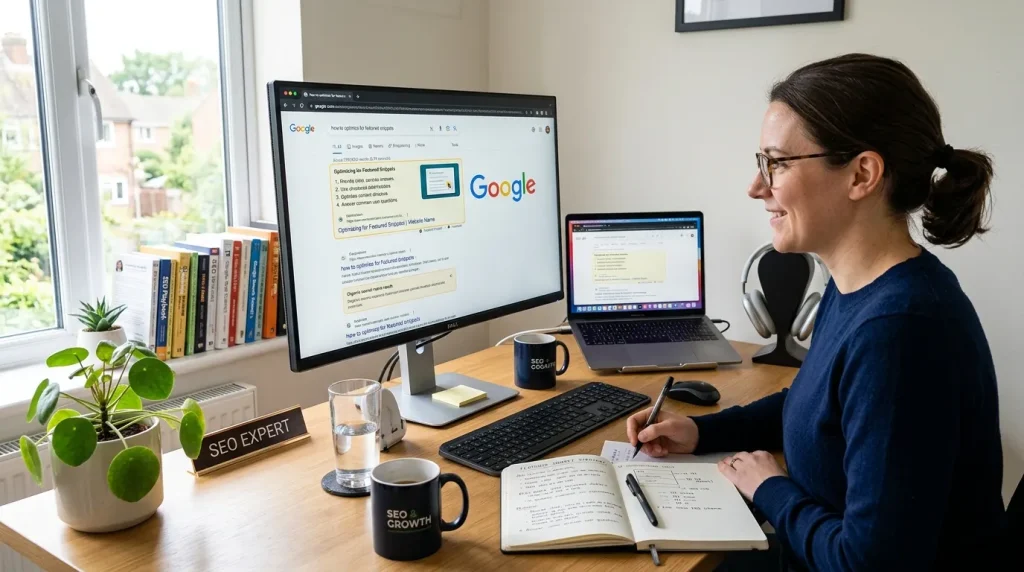
Google featured snippets SEO has become one of the most contested areas of search optimization. The sites winning these placements aren’t always the ones with the highest domain authority. They’re the ones that format their content the way Google wants to present it. That’s a skill you can develop systematically.
This guide covers everything you need to know: what featured snippets are, how Google selects them, how to identify the right keywords, how to structure your pages for featured snippet optimization, and how to track and improve your results over time. By the end, you’ll have a repeatable process for targeting and winning these high-visibility placements.
What Are Google Featured Snippets?
A Google featured snippet is a highlighted search result that appears at the very top of the search engine results page (SERP), above the standard organic listings—often called “position zero.” Google pulls content from a ranking page and displays it directly in the results, giving users a fast answer without requiring them to click through.
Featured snippets come in four main formats:
- Paragraph snippets: A short block of text, typically 40–60 words, answering a “what is” or “how does” question
- List snippets: Numbered or bulleted lists used for step-by-step processes, rankings, or collections
- Table snippets: Data displayed in rows and columns, common for comparisons or pricing information
- Video snippets: YouTube videos selected for queries where a demonstration adds value
Understanding which format applies to your target query is the first step toward winning it. Search your keyword and study what format currently occupies the snippet. That’s the format Google prefers for that intent—and the one you should match.
How Does Google Select Featured Snippets?
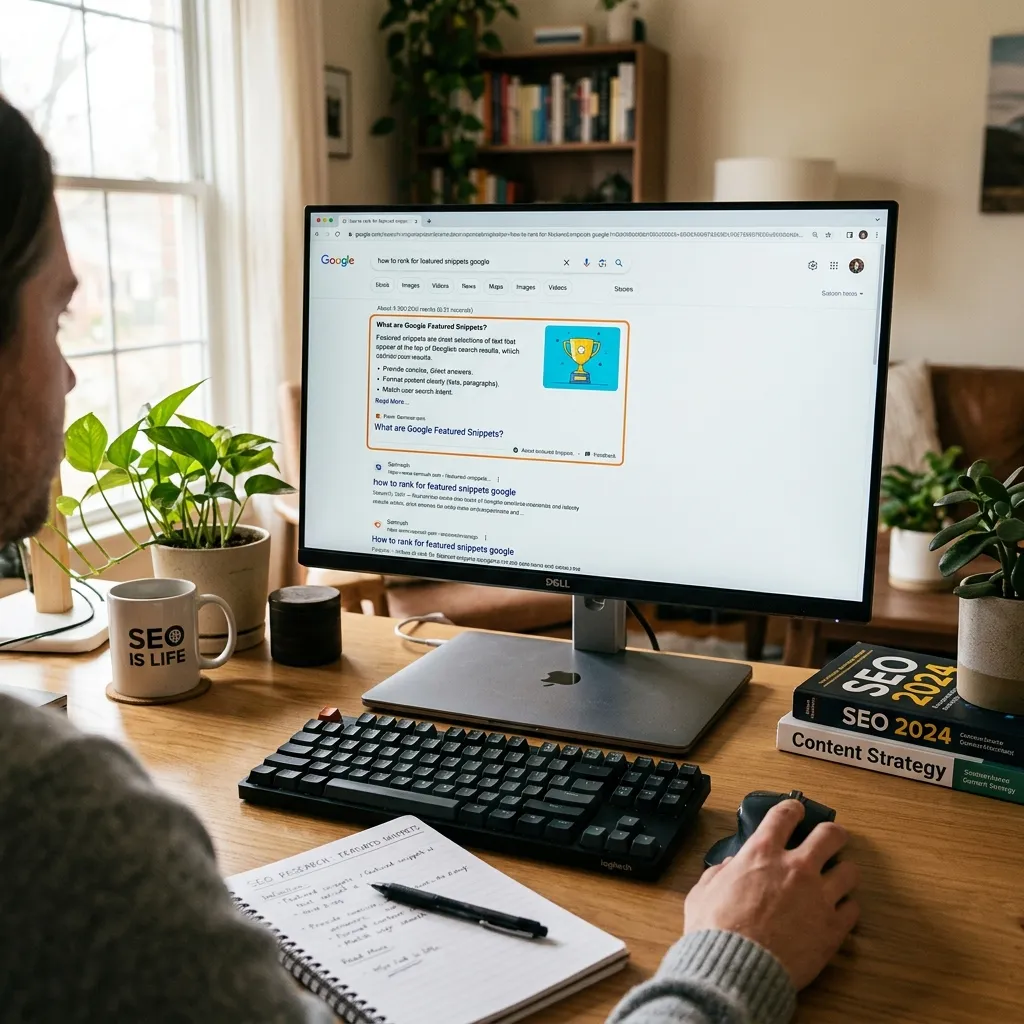 Google doesn’t publish a formal rulebook for snippet selection, but years of analysis reveal consistent patterns. Google featured snippets SEO depends on three core factors.
How does search intent influence featured snippet selection?
Google selects snippets for queries that have a clear, singular answer. Informational and question-based searches dominate—queries starting with “how,” “what,” “why,” “when,” and “best way to” are high-probability snippet candidates. Navigational or purely transactional queries rarely produce snippets.
Aligning your content with the precise intent behind a query is foundational. To understand how this works at a deeper level, the search intent optimization guide covers the full framework for matching content format to user expectations.
What role does E-E-A-T play in featured snippet eligibility?
Google’s E-E-A-T framework—Experience, Expertise, Authoritativeness, and Trustworthiness—shapes how the algorithm evaluates content quality. Pages that demonstrate first-hand experience, cite credible sources, and maintain factual accuracy are more likely to be trusted with a featured position. Thin content written without depth rarely earns a snippet, regardless of how well it’s formatted.
Do you need to rank on page one to get a featured snippet?
Yes—almost always. According to a 2020 study by SEMrush, approximately 99% of featured snippets come from pages already ranking in the top 10. If your page sits on page two or below, how to rank in featured snippets requires first improving your overall ranking before snippet optimization becomes relevant.
How to Identify Keywords Worth Targeting for Featured Snippets
Not every keyword triggers a featured snippet. Targeting the wrong queries wastes time. Effective featured snippet optimization starts with finding the right opportunities.
What types of keywords are most likely to trigger featured snippets?
Question-based and long-tail keywords are the highest-probability targets. Phrases like “how to get featured snippets on Google,” “what is schema markup,” or “best way to structure a blog post for SEO” all carry strong snippet potential. Broad, single-word keywords rarely produce snippets because they lack the specific intent Google needs to populate one.
You can read more about building a keyword strategy around intent in the intent-based keyword research strategy guide.
Which tools help identify featured snippet keyword opportunities?
Several SEO platforms make snippet research efficient:
- Semrush: Filter keyword data by SERP features and specifically target keywords that already trigger a snippet, showing you exactly which competitor currently holds it
- Ahrefs: Use the SERP features filter to find keywords in positions 2–10 where a snippet exists—these are the fastest wins since the snippet already exists and your page is close enough to compete
- Google Search Console: Check your existing queries for impressions without snippet ownership; these are pages you already rank for that could move up with structural improvements
- Answer the Public / AlsoAsked: Surface the full universe of question-based queries around any topic
Prioritize keywords where you already rank on page one. You don’t need to build authority from scratch—you just need to restructure how your content presents the answer.
On-Page Optimization Strategies for Featured Snippet Optimization
Winning a snippet is primarily an on-page challenge. The following strategies form the core of effective Google featured snippets SEO.
How should you structure content for a paragraph snippet?
Identify the primary question your page targets and provide a direct, complete answer in the first paragraph after your H2 or H3 heading. Keep the answer between 40 and 60 words. Don’t bury the answer three paragraphs into a section—Google needs to find it quickly. Write as if you’re answering the question for someone who wants the fastest possible response, then build your deeper explanation afterward.
How do you format lists and tables for snippet selection?
For list snippets, use proper HTML ordered (<ol>) or unordered (<ul>) lists rather than formatting lists with dashes in plain text. Google reads HTML list markup cleanly. Each list item should be concise—one sentence or a short phrase—and the list should logically answer the query.
For table snippets, structure your data with clear column headers and consistent row formatting. Comparison tables—pricing, features, pros and cons—are common snippet candidates because they give users organized, scannable data.
Why do clear headings and subheadings matter for featured snippets?
Google frequently pulls snippet content based on heading context. A heading phrased as a specific question, followed immediately by a direct answer, closely matches what Google is looking for. Vague headings like “More Information” or “Other Tips” never earn snippets. Every H2 and H3 should be specific enough to stand on its own as a search query.
What is schema markup and how does it affect snippet eligibility?
Schema markup is structured data added to your HTML that tells search engines exactly what your content represents. For featured snippet optimization, two schema types carry the most weight:
- FAQ Schema: Marks up question-and-answer content, making it eligible for expanded FAQ results directly in the SERP
- How-To Schema: Marks up step-by-step processes, eligible for rich result displays that show individual steps with time estimates and images
According to Google’s Search Central documentation on structured data, implementing schema markup helps Google surface your content across a wider variety of result types, including featured snippets and AI Overviews. For a practical implementation walkthrough, the structured data and schema markup guide covers the technical setup in full.
Content Quality and Relevance: What Google Rewards
 Formatting alone won’t win a featured snippet if the underlying content is thin or inaccurate. How to rank in featured snippets requires genuinely useful content that fully addresses user intent.
How does content depth affect featured snippet eligibility?
Google selects snippets from pages it trusts to provide accurate, comprehensive information. A post that answers one question in isolation while ignoring related subtopics signals a narrow coverage of the topic. Strong snippet candidates tend to be thorough guides that address the full user journey—not just the exact keyword phrase.
Study the current top-ranking pages for your target query. Note which subtopics they cover, which questions they answer, and how deeply they develop each section. Your page should match or exceed that coverage.
How does keyword density affect featured snippet optimization?
Focus keyword density for “how to get featured snippets on Google” and related terms like “Google featured snippets SEO,” “featured snippet optimization,” and “how to rank in featured snippets” should feel natural, not forced. Aim to use your primary focus keyword in the H1, at least one H2, the meta description, and the opening paragraph. Distribute secondary keywords throughout subheadings and body copy where they fit contextually. Stuffing the same phrase every other sentence is a fast way to signal low-quality content—and Google’s quality signals will reflect that.
Technical SEO Considerations for Featured Snippets
Content structure matters, but technical performance creates the foundation that makes snippet eligibility possible.
Does page speed affect featured snippet rankings?
Page speed is a direct Google ranking factor via Core Web Vitals. A page that loads slowly, shifts layout during load, or fails mobile responsiveness tests will underperform in rankings—which makes it harder to reach the page-one threshold where snippet selection occurs. Run your high-priority pages through Google’s PageSpeed Insights and address any issues scoring below the recommended thresholds.
Why does HTTPS matter for featured snippet eligibility?
Google has confirmed HTTPS as a ranking signal. Secure sites carry a minor but consistent ranking advantage, and pages on non-HTTPS domains rarely occupy featured positions at scale. If your site still runs on HTTP, migrating to HTTPS is a prerequisite for competitive SEO—not just for snippets, but for rankings across the board.
How does internal linking support featured snippet optimization?
Internal links distribute authority from your high-performing pages to your snippet targets. A page sitting at position six with strong internal links flowing to it has a better chance of moving into the top five—the zone where snippet selection becomes realistic. Use descriptive anchor text that includes relevant keywords rather than generic phrases. For an understanding of how content refresh and updates affect your internal linking strategy, the content update for SEO ranking boost guide provides a full framework.
External links to authoritative sources—Google’s own documentation, peer-reviewed research, established industry publications—strengthen your page’s E-E-A-T signals. According to Moz’s Beginner’s Guide to Link Building, linking to credible external sources reinforces topical authority and signals to search engines that your content is well-researched.
How to Monitor and Analyze Your Featured Snippet Performance
Optimization without measurement is guesswork. Build a tracking system before you start changing pages so you can attribute results accurately.
How do you track featured snippet rankings in Google Search Console?
Google Search Console is your primary tool. Filter your performance data by queries, then look for keywords where your page earns impressions but not a high click-through rate. A page appearing for a snippet query but generating lower-than-expected CTR may have the wrong title or meta description for the user’s intent.
You can also use Semrush’s Position Tracking feature to monitor specific keywords for SERP feature changes. Set up weekly alerts so you know immediately when a competitor takes a snippet you previously held, or when you earn a new one.
What does A/B testing look like for featured snippet optimization?
You can’t run a true split test on a single URL, but you can test systematically. Make one structural change at a time—rewrite your direct answer paragraph, add a bulleted list, restructure your heading—then wait two to four weeks for Google to recrawl and re-evaluate. Track position and click-through rate changes in Search Console. If a change improves both metrics, keep it and move to the next variable.
Advanced Tactics for Dominating Featured Snippets
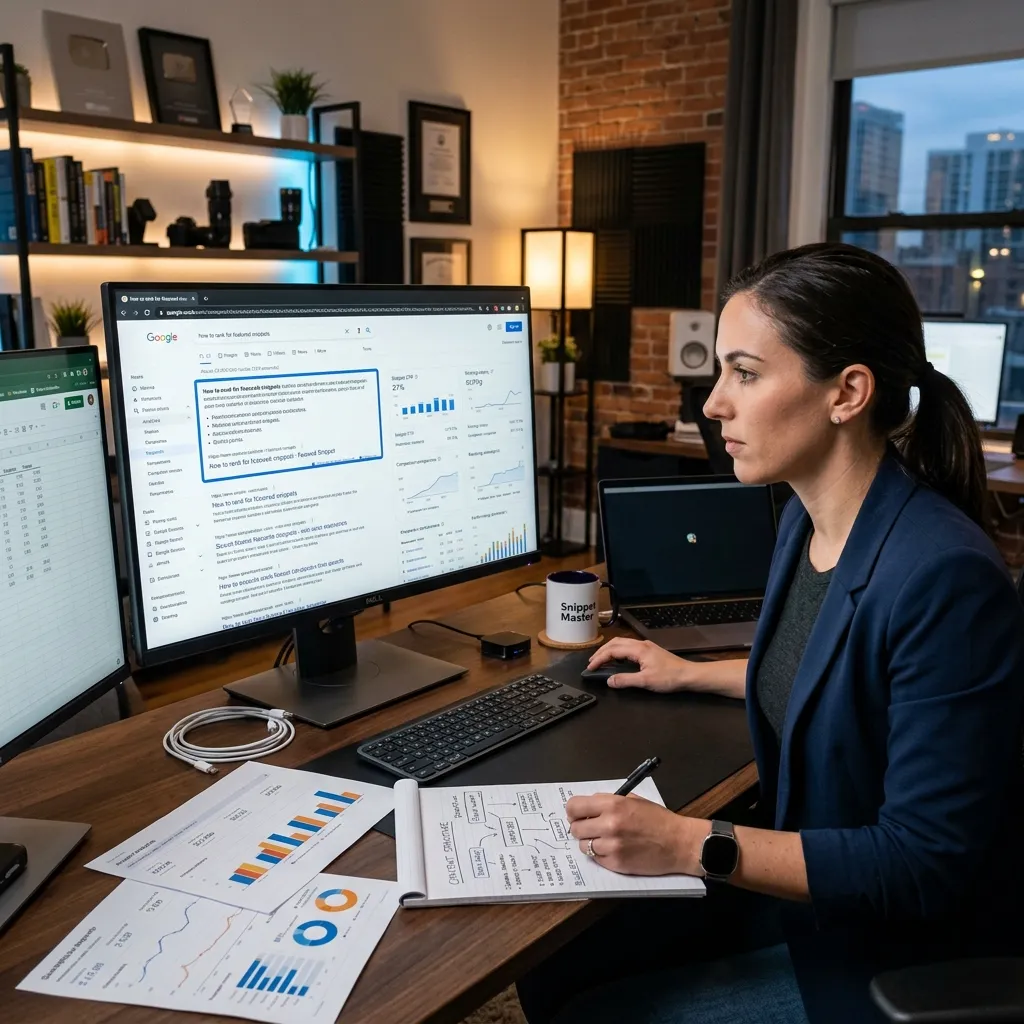 Once you’ve covered the fundamentals, these additional strategies can push your results further.
How do you target “People Also Ask” boxes for additional visibility?
“People Also Ask” (PAA) boxes often share content sources with featured snippets. Answering PAA questions within your content—using the exact question as a subheading followed by a concise, direct answer—increases your chances of appearing in both placements simultaneously. Use tools like AlsoAsked to find the full cluster of related questions around your primary keyword and incorporate them throughout your content.
How does optimizing for voice search overlap with featured snippet strategy?
Voice search and featured snippets are closely linked. Most voice search answers are pulled directly from featured snippets. Conversational, question-based phrasing, direct answers in the 40–60 word range, and clear list structures are the same elements that power both. Optimizing one effectively optimizes the other. The voice search SEO guide covers the technical and content elements of voice optimization in more detail.
Do images and videos help win featured snippets?
Visual content can appear within featured snippets, particularly for “how to” queries. Google sometimes pulls an image from a different page than the text it features. Descriptive, keyword-relevant alt text and compressed, high-quality images improve your eligibility. For video snippets, well-structured YouTube content with accurate timestamps and a clear, matching title competes directly for video snippet positions.
Common Mistakes to Avoid When Optimizing for Featured Snippets
Why does keyword stuffing hurt snippet eligibility?
Keyword stuffing signals low-quality content. Google’s algorithm, particularly post-Helpful Content Update, favors pages that demonstrate expertise through depth and accuracy—not repetition. Use your focus keyword naturally in key positions and let semantic context carry the rest.
How does an unclear or ambiguous answer prevent snippet selection?
Google needs a single, definitive answer to populate a snippet. Content that presents multiple conflicting perspectives without a clear conclusion, or answers that bury the core response in qualifications, are unlikely to be selected. Lead with the answer, then provide nuance and context afterward.
Why does neglecting mobile users cost you snippet opportunities?
Google indexes the mobile version of your site first. Content that renders poorly on mobile—broken tables, overlapping text, unreadable fonts—creates a degraded experience that suppresses rankings and snippet eligibility. Test every high-priority page in mobile view before publishing.
1. What is a featured snippet on Google?
A featured snippet is a highlighted answer box appearing at the top of Google’s search results, above organic listings. Google pulls content directly from a ranking webpage to answer a specific user query, displaying it as a paragraph, list, table, or video.
2. Do you need to rank number one to get a featured snippet?
No. Featured snippets are most commonly pulled from pages ranking in positions two through five. According to SEMrush, approximately 99% of snippet-holding pages already rank within the top 10 results for that keyword.
3. How long should a featured snippet answer be?
Paragraph snippets perform best when the answer is between 40 and 60 words. List snippets don’t have a strict word limit, but each individual list item should be concise—one sentence or a short phrase.
4. Does schema markup guarantee a featured snippet?
No. Schema markup increases your eligibility for rich results and featured snippets, but Google makes the final selection based on content quality, relevance, and page authority. Schema is a strong signal, not a guarantee.
5. Can you lose a featured snippet once you have it?
Yes. Featured snippets are re-evaluated continuously. A competitor publishing stronger, better-structured content on the same topic can displace you. Regular monitoring in Google Search Console and periodic content refreshes help you maintain snippet positions.
6. Which content format wins featured snippets most often?
Paragraph snippets are the most common format, followed by numbered list snippets for step-by-step processes. The best format depends on the query—study the current SERP for your target keyword to see what Google already prefers.
7. How long does it take to get a featured snippet after optimizing?
Most pages see ranking movement within two to four weeks of re-indexing after a substantive change. Featured snippet selection can follow within that same window if your page already ranks in the top five.
8. Does page speed affect featured snippet eligibility?
Page speed affects your overall ranking position, which indirectly affects snippet eligibility. Pages with poor Core Web Vitals scores that rank outside the top 10 cannot compete for snippets. Improving technical performance is a prerequisite for competitive snippet optimization.
9. Should every page on my site target a featured snippet?
No. Only pages targeting question-based or informational queries with clear, singular answers are viable snippet candidates. Prioritize pages where a snippet already exists and you already rank on page one.
10. What is the fastest way to test featured snippet optimization?
Rewrite the direct answer paragraph immediately following your primary H2—keep it under 60 words, make it specific, and structure it as a complete, standalone answer. Submit the URL in Google Search Console for recrawling, then monitor impressions and click-through rate changes over the following two to four weeks.