


SEO for beginners simplifies website optimization by covering keyword research, content creation, on-page and technical SEO, and user experience. Following these steps helps newcomers boost organic traffic, improve search rankings, and build a solid foundation for long-term online success.
Search engine optimization (SEO) can seem daunting for those new to digital marketing. SEO for beginners focuses on breaking down complex strategies into simple, actionable steps. From keyword research to site performance, this guide helps novices improve visibility and attract organic traffic effectively.
What is SEO and Why Does It Matter?
 SEO stands for Search Engine Optimization. It’s the practice of optimizing your website and content to rank higher in search engine results pages (SERPs). When someone searches for information related to your business, you want your website to appear as close to the top as possible.
Why? Because higher rankings mean more visibility, more traffic, and ultimately more customers. The first five results on Google receive 67% of all clicks, while results on the second page get less than 6% of traffic.
How Search Engines Work
Search engines like Google use complex algorithms to crawl, index, and rank web pages. Here’s a simplified version of the process:
- Crawling: Search engine bots discover and scan web pages
- Indexing: Pages are stored in the search engine’s database
- Ranking: When someone searches, the algorithm determines which pages to show and in what order
Understanding this process helps you optimize your site for each stage.
Keyword Research: The Foundation of SEO
Keyword research identifies the terms and phrases your target audience searches for. This intelligence guides your content creation and optimization efforts.
Types of Keywords
- Short-tail keywords are broad, one to three-word phrases like “running shoes.” They have high search volume but intense competition.
- Long-tail keywords are more specific phrases like “best running shoes for flat feet.” They have lower search volume but higher conversion rates and less competition.
- LSI (Latent Semantic Indexing) keywords are terms semantically related to your main keyword. For example, if your main keyword is “coffee,” LSI keywords might include “caffeine,” “brewing,” and “espresso.”
Keyword Research Tools
Several tools can help you find valuable keywords:
- Google Keyword Planner: Free tool that shows search volume and competition
- Ahrefs Keywords Explorer: Comprehensive paid tool with detailed metrics
- SEMrush: All-in-one SEO platform with keyword research capabilities
- Ubersuggest: Budget-friendly option with good keyword suggestions
Keyword Research Process
Start by brainstorming seed keywords related to your business. Enter these into your chosen tool to generate related keywords. Look for terms with decent search volume and manageable competition.
Analyze the search intent behind each keyword. Are people looking for information, trying to make a purchase, or seeking a specific website? Match your content to the intent.
Create a keyword map that assigns target keywords to specific pages on your site. This prevents keyword cannibalization, where multiple pages compete for the same terms.
On-Page SEO: Optimizing Individual Pages
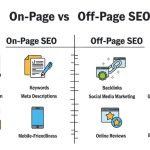
On-page SEO involves optimizing individual web pages to rank higher and earn more relevant traffic. It includes both content and HTML source code optimization.
Title Tags and Meta Descriptions
Your title tag is the clickable headline that appears in search results. Keep it under 60 characters and include your target keyword near the beginning.
Meta descriptions provide a brief summary of your page content. While they don’t directly impact rankings, compelling descriptions can improve click-through rates. Keep them under 155 characters.
Header Tags (H1, H2, H3)
Use header tags to structure your content hierarchically. Your H1 should include your main keyword and clearly describe the page topic. Use H2 and H3 tags for subheadings to break up content and improve readability.
Content Optimization
Create high-quality, comprehensive content that thoroughly addresses your target topic. Use your primary keyword naturally throughout the text, including in:
- The first 100 words
- At least one subheading
- The conclusion
- Image alt text
But avoid keyword stuffing. Focus on writing for humans first, search engines second.
Internal Linking
Link to other relevant pages on your website using descriptive anchor text. This helps search engines understand your site structure and distributes page authority throughout your site.
Image Optimization
Optimize images by:
- Using descriptive filenames
- Adding alt text that describes the image
- Compressing files to reduce load times
- Using appropriate image formats (WebP when possible)
Technical SEO: Behind-the-Scenes Optimization
Technical SEO ensures search engines can crawl, index, and understand your website effectively.
Site Speed Optimization
Page speed is a ranking factor and crucial for user experience. Optimize your site speed by:
- Compressing images
- Minifying CSS and JavaScript
- Using browser caching
- Choosing quality hosting
- Implementing a Content Delivery Network (CDN)
Mobile Optimization
Google uses mobile-first indexing, meaning it primarily uses the mobile version of your site for ranking. Ensure your site is responsive and provides a good mobile experience.
SSL Certificate
HTTPS is a ranking signal. Install an SSL certificate to secure your site and display the padlock icon in browsers.
XML Sitemaps
Create and submit an XML sitemap to help search engines discover and index your pages. Most CMS platforms can generate sitemaps automatically.
Robots.txt
Use a robots.txt file to guide search engine crawlers and prevent them from accessing certain pages or sections of your site.
Off-Page SEO: Building Authority and Trust
 Off-page SEO refers to activities outside your website that impact your search rankings. The most important factor is link building.
Link Building Strategies
- Guest posting involves writing articles for other websites in exchange for a backlink. Focus on high-quality, relevant sites.
- Resource page outreach means finding pages that list helpful resources and suggesting your content for inclusion.
- Broken link building involves finding broken links on other sites and suggesting your content as a replacement.
- Digital PR uses newsworthy content to earn coverage and links from media outlets.
Local SEO (For Beggainer)
For businesses with physical locations, local SEO is crucial. Optimize for local search by:
- Creating and optimizing your Google My Business profile
- Encouraging customer reviews
- Building local citations (mentions of your business name, address, and phone number)
- Creating location-specific content
Content Strategy for SEO
Quality content is the backbone of successful SEO. Search engines reward sites that provide valuable, relevant information to users.
Content Types That Perform Well
- How-to guides answer specific questions and provide step-by-step instructions.
- List posts (like “10 Best…”) are easy to scan and often earn backlinks.
- Ultimate guides provide comprehensive coverage of a topic.
- Case studies showcase real results and build credibility.
- Tool reviews help people make purchasing decisions.
Content Optimization Tips
- Research your topic thoroughly before writing. Look at the top-ranking pages for your target keyword to understand what users expect.
- Structure your content with clear headings, bullet points, and short paragraphs. Use images, videos, and other media to break up text.
- Update existing content regularly to keep it fresh and accurate. Search engines favor recently updated content.
Measuring SEO Success
Track your SEO performance using key metrics:
- Organic traffic shows how many visitors come from search engines.
- Keyword rankings indicate how well your pages rank for target terms.
- Click-through rate (CTR) measures how often people click your results when they appear in search.
- Conversion rate tracks how many visitors complete desired actions.
- Backlink profile shows the quantity and quality of sites linking to you.
Use tools like Google Analytics, Google Search Console, and third-party SEO platforms to monitor these metrics.
Common SEO Mistakes to Avoid
Many website owners make critical errors that hurt their SEO performance:
- Keyword stuffing makes content unreadable and can result in penalties.
- Ignoring user experience leads to high bounce rates and poor rankings.
- Neglecting mobile optimization hurts performance since most searches now happen on mobile devices.
- Buying low-quality backlinks can result in manual penalties.
- Focusing only on search engines instead of creating valuable content for users.
Link Building Strategies
Backlinks from reputable sites improve authority and search rankings. Guest posting, resource page outreach, broken link building, and digital PR are effective methods. Focus on quality over quantity; links from trusted domains matter more than numerous low-quality backlinks. Encourage natural linking through shareable content. Monitor backlinks for spammy links and disavow harmful ones. Building relationships with niche influencers and industry sites creates long-term link opportunities. Link building supports brand authority, referral traffic, and higher SERP visibility, forming an integral part of off-page SEO.
Local SEO Optimization
Local SEO helps businesses rank for region-specific searches. Optimize Google Business Profile, encourage reviews, and ensure accurate NAP (Name, Address, Phone) information. Create local content relevant to your city or region. Build local citations and backlinks. Mobile-friendly design is critical for local users. Utilize location-specific keywords in content and metadata. Local SEO drives foot traffic, boosts trust, and connects with audiences actively searching for your services nearby. For multi-location businesses, implement localized pages for each branch to maximize visibility.
Mobile SEO Best Practices
With mobile-first indexing, Google evaluates the mobile version of websites for ranking. Ensure responsive design, fast loading, and clear navigation. Avoid intrusive pop-ups. Use legible fonts and optimize images for mobile screens. Test mobile usability regularly with tools like Google’s Mobile-Friendly Test. Mobile SEO improves engagement, reduces bounce rates, and enhances overall rankings. A seamless mobile experience aligns with user expectations and supports SEO performance.
Measuring and Analyzing SEO Performance
Tracking SEO metrics ensures your strategy works. Use Google Analytics, Search Console, and SEO tools to monitor traffic, rankings, CTR, conversions, and backlink profile. Identify pages performing poorly and optimize them. Compare performance over time to evaluate growth. Analytics help refine keyword targeting, content creation, and technical fixes. Data-driven decisions maximize ROI, enabling continuous improvement of SEO strategy.
Common SEO Mistakes and How to Avoid Them
Avoid keyword stuffing, duplicate content, poor user experience, low-quality backlinks, and ignoring mobile optimization. Focus on valuable content for users rather than just search engines. Stay updated on algorithm changes. Regular audits prevent technical issues. By identifying and correcting mistakes, you protect rankings, enhance user engagement, and ensure long-term SEO success.
Your Next Steps to SEO Success
 SEO is a marathon, not a sprint. Results take time, but the long-term benefits are worth the investment.
Start with keyword research to identify opportunities. Then optimize your existing content and create new pages targeting valuable keywords. Fix technical issues that might be holding you back.
Build high-quality backlinks through outreach and content marketing. Monitor your progress and adjust your strategy based on what works.
Remember, SEO is constantly evolving. Stay updated with algorithm changes and best practices. Focus on creating valuable content that serves your audience, and the rankings will follow.
The websites that succeed in SEO are those that consistently provide value to users. By following the strategies in this guide and staying committed to continuous improvement, you’ll see your search rankings—and your business—grow.
Conclusion
SEO is a long-term investment that drives sustainable growth. By combining keyword research, on-page and technical SEO, high-quality content, and off-page strategies, businesses can increase visibility, attract qualified traffic, and improve conversions. Continuous monitoring, updates, and adaptation to algorithm changes ensure lasting success.
FAQs About SEO
1. What is SEO?
SEO, or Search Engine Optimization, is the practice of improving your website so that it ranks higher in search engine results pages (SERPs). It involves optimizing content, technical elements, and external signals to make your site more attractive to both users and search engines. A well-executed SEO strategy increases visibility, drives organic traffic, and enhances your site’s credibility.
2. Why is SEO important?
SEO is crucial because most online experiences begin with a search engine. Higher rankings mean more visibility, leading to increased website traffic, more qualified leads, and greater revenue potential. Without SEO, even the best content might go unnoticed in a crowded digital landscape.
3. What are keywords?
Keywords are the words and phrases people type into search engines when looking for information, products, or services. Identifying and targeting the right keywords ensures your content reaches the right audience. Using tools like Google Keyword Planner, Ahrefs, or SEMrush helps find high-volume, low-competition keywords relevant to your business.
4. What is on-page SEO?
On-page SEO refers to optimizations made directly on your website. This includes improving page titles, meta descriptions, headings, images, internal links, URL structure, and content quality. It ensures that search engines can understand your content and that users have a seamless experience.
5. What is off-page SEO?
Off-page SEO involves activities outside your website that influence search rankings, primarily link building. Earning backlinks from authoritative, relevant websites signals trustworthiness to search engines. Other off-page tactics include social sharing, influencer collaborations, and digital PR efforts.
6. What is technical SEO?
Technical SEO focuses on backend elements that make your site crawlable, indexable, and fast. Examples include improving site speed, mobile responsiveness, structured data, XML sitemaps, SSL certificates, and fixing broken links. A technically sound site lays the foundation for all other SEO efforts.
7. How long does SEO take to show results?
SEO is a long-term strategy. Most websites begin seeing noticeable improvements in 3–6 months, though highly competitive industries may take longer. Consistency in content creation, link building, and technical maintenance is key to sustained success.
8. Does content quality affect SEO?
Yes, content is central to SEO. High-quality, informative, and engaging content improves dwell time, reduces bounce rates, and earns backlinks—all critical ranking factors. Writing content that addresses user intent ensures your site becomes a trusted source for both visitors and search engines.
9. What is local SEO?
Local SEO helps businesses appear in location-based searches, such as “coffee shop near me.” It’s crucial for physical stores, service providers, or regional businesses. Tactics include optimizing Google Business Profile listings, building local citations, gathering reviews, and creating location-specific content.
10. Do backlinks still matter?
Absolutely. Backlinks from reputable websites signal authority and trustworthiness to search engines. Quality matters more than quantity—links from relevant, high-domain sites carry the most weight in boosting search rankings.
11. What is mobile-first indexing?
Mobile-first indexing means Google primarily evaluates the mobile version of your website for ranking and indexing. Websites that are not mobile-friendly may rank lower, as mobile usability, speed, and responsiveness are essential for user experience.
12. Can SEO be automated?
Some SEO tasks, like site audits, keyword tracking, and performance reporting, can be automated using tools. However, content strategy, creation, optimization, and link-building require human judgment, creativity, and strategy to succeed effectively.


I’m a seasoned mobile marketing strategist helping businesses engage customers through mobile-first campaigns. Specializing in SMS marketing, app optimization, and user engagement, I create strategies that drive conversions and foster lasting relationships.













No Comments