



Voice search SEO optimizes websites for conversational queries via virtual assistants. Focus on long-tail keywords, natural-language content, fast mobile performance, structured data, and FAQ sections. Track performance through analytics tools, adjust strategies based on trends, and prepare for emerging AI-driven and context-aware voice search technologies to stay competitive.
In recent years, voice search has surged in popularity as more users rely on virtual assistants and smart speakers to find information online. With devices like Siri, Alexa, and Google Assistant becoming household staples, optimizing your website for voice queries is no longer optional. By tailoring your content and technical setup to meet the unique demands of spoken search, you can capture new traffic, improve user experience, and stay ahead of competitors.
Understanding Voice Search and Its Impact on SEO

Voice searches tend to be longer and more conversational than typed queries. Users often ask questions in natural language and expect concise answers. This shift affects keyword research, content structure, and page optimization. According to recent studies, nearly half of all online searches will be voice-based, and local businesses stand to benefit the most. Voice search also often triggers featured snippets or answer boxes, making position zero a key target. Understanding how digital assistants parse and present content is crucial for any modern SEO strategy.
Conducting Voice-Focused Keyword Research
Traditional keyword tools excel at short phrases, but voice search demands long tail, question-oriented terms. Use platforms like AnswerThePublic, AlsoAsked, and Google Autocomplete to discover question formats users employ. Focus on who, what, where, when, why, and how queries. Group related questions into themes and map them to your site pages. Incorporate conversational variants of your primary keywords and prioritize search intent—informational, navigational, or transactional—to align content with user expectations.
Optimizing Content for Natural Language
Once you’ve identified your voice-oriented keywords, the next step is to integrate them into your content in a natural, conversational way. Unlike traditional SEO, voice search favors content that answers questions directly and succinctly. Start by placing a clear, concise answer near the top of your page—this mirrors how virtual assistants deliver spoken responses to users.
Use headings and subheadings formatted as questions to organize content for both scanning and voice-friendly reading. For example, use “How do I optimize my website for voice search?” instead of generic titles. Lists, bullet points, and numbered steps are ideal for step-by-step instructions, making it easier for digital assistants to parse and relay answers accurately.
Maintain a conversational tone, using simple language and phrasing that mirrors how people naturally speak. Avoid technical jargon unless your audience specifically expects it, and consider incorporating synonyms or alternate phrasings to match the variety of ways users might ask the same question.
Additionally, create compact paragraphs—around 2–3 sentences each—so content is digestible and easily skimmed. Highlight key points using bold or italics where appropriate, but sparingly, to improve readability. This not only enhances the chance of your content being selected for featured snippets or answer boxes but also improves accessibility for mobile users and on-screen readers.
Finally, continuously review and update content to ensure it aligns with evolving voice query trends and user intent. By structuring your content for natural language understanding, you increase visibility in voice search results while providing a superior user experience.
Technical SEO Best Practices for Voice Search
Technical SEO is a cornerstone of voice search optimization, ensuring that your website performs efficiently and can be easily interpreted by search engines and virtual assistants. Since most voice queries originate on mobile devices, adopting a mobile-first design is essential. This means responsive layouts, legible text without zooming, and intuitive navigation tailored to smaller screens.
Page speed is another critical factor. Aim for pages to load in under three seconds, optimizing core web vitals such as Largest Contentful Paint (LCP), First Input Delay (FID), and Cumulative Layout Shift (CLS). Slow-loading pages frustrate users, increase bounce rates, and reduce the likelihood that your content will be selected for voice responses. Techniques like image optimization (WebP, AVIF formats), lazy loading, and minifying CSS/JavaScript are effective strategies to improve performance.
Security and trustworthiness are also key. Transitioning to HTTPS not only protects user data but also signals credibility to search engines. Additionally, a streamlined site architecture ensures that crawlers can efficiently index your pages, which is vital for complex sites with many nested pages or dynamic content.
For global audiences, implement hreflang tags to serve the appropriate language or regional version of content to users. Properly configured XML sitemaps help search engines discover all relevant pages quickly, increasing the chances that content is featured in voice search results.
By combining mobile-first design, fast-loading pages, secure connections, and optimized site architecture, your website will be technically prepared to perform well in voice search queries, providing users with accurate and immediate answers.
Leveraging Structured Data and Schema Markup
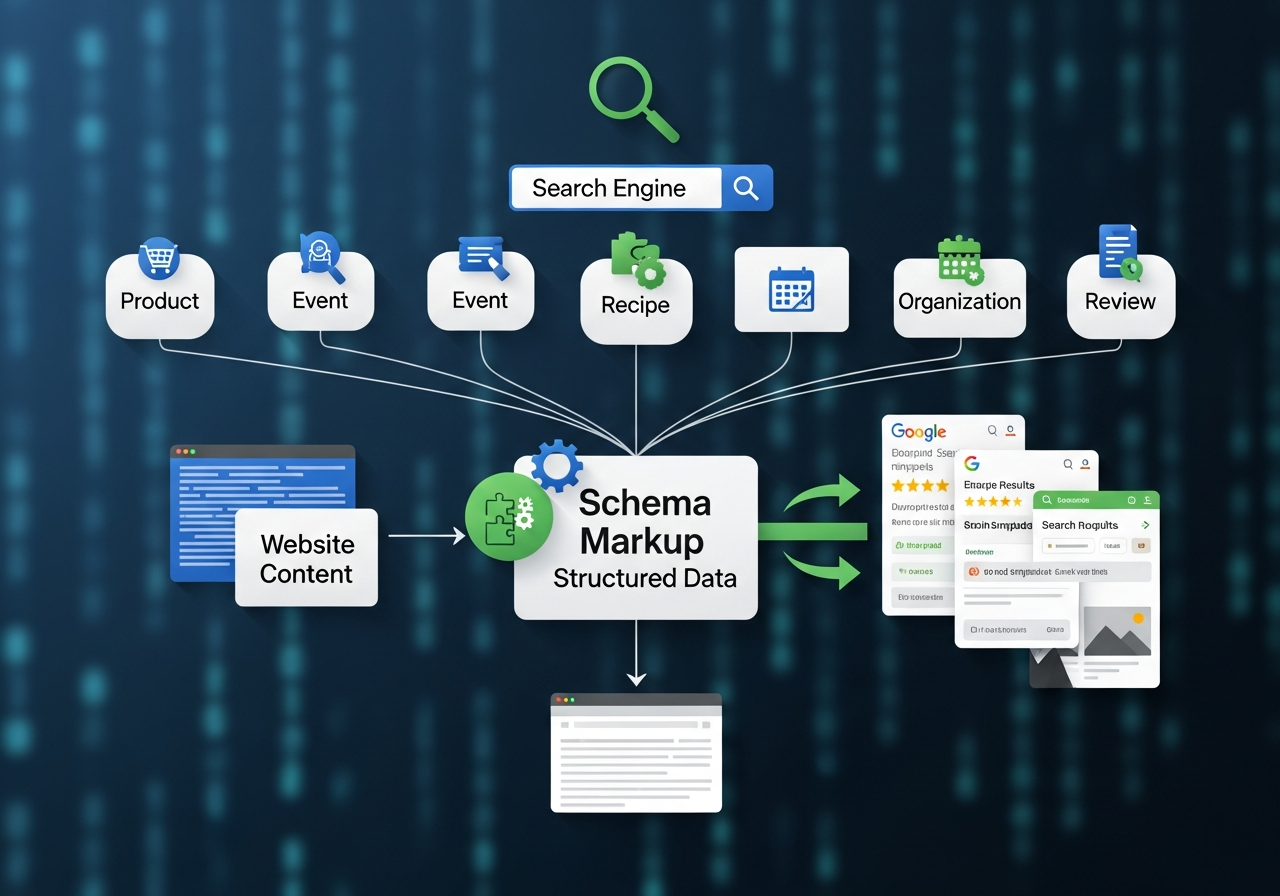
Structured data plays a critical role in helping search engines accurately interpret and present your content in rich results, which is especially important for voice search SEO. By clearly signaling the type and context of your content, structured data increases the likelihood that virtual assistants like Siri, Alexa, and Google Assistant will fetch your information directly.
For voice search optimization, prioritize Schema types such as FAQPage, QAPage, HowTo, and Speakable. These schemas allow you to mark up question-and-answer pairs, step-by-step instructions, and portions of your content intended to be read aloud. Implement JSON–LD snippets in the <head> section of your HTML or dynamically inject them via your CMS to ensure search engines can interpret the data correctly.
Testing is essential. Use Google’s Rich Results Test to validate your markup and ensure it qualifies for rich features. Regularly monitor for errors or warnings in Google Search Console to maintain flawless implementation and avoid issues that could prevent your content from appearing in voice or featured snippet results.
Additionally, keep your structured data updated to reflect new content or changes to existing information, as stale or incorrect markup can harm your visibility. Combining accurate structured data with high-quality, conversational content dramatically improves your chances of being chosen for voice search results, enhancing both discoverability and user experience.
Enhancing Page Speed and Mobile Performance
Enhancing page speed and mobile performance is crucial for voice search optimization, as users expect immediate answers and will abandon slow-loading sites. Begin by optimizing images using modern formats like WebP or AVIF, which reduce file size without compromising quality. Implement lazy loading so that images and media load only when they appear in the viewport, improving initial load times. Minify CSS, JavaScript, and HTML to remove unnecessary code and streamline page rendering.
Leverage a Content Delivery Network (CDN) to distribute your site’s assets across servers closer to your audience, reducing latency and improving response time globally. For article-style or blog content, consider implementing Accelerated Mobile Pages (AMP) to deliver lightweight, fast-loading versions of your pages optimized for mobile devices.
Monitor and verify performance improvements using tools like Google Lighthouse, PageSpeed Insights, and real-world metrics from the Chrome User Experience Report. Track key indicators such as Largest Contentful Paint (LCP), First Input Delay (FID), and Cumulative Layout Shift (CLS) to ensure optimal loading speed and usability. Continuously test and refine these elements, as even small delays can negatively impact user experience, engagement, and voice search rankings. Prioritizing fast, mobile-friendly pages ensures your site is competitive in an increasingly voice-first digital landscape.
Creating an FAQ Section for Voice Queries
Creating an FAQ section is one of the most effective ways to optimize your website for voice search, as it provides concise, structured answers that digital assistants can easily read and relay to users. Start by identifying the most common questions your audience asks, using tools like AnswerThePublic, AlsoAsked, or Google’s “People also ask” feature. Structure each question as a heading—using <h2> or <h3> tags—and provide clear, succinct answers in <p> tags immediately below.
Organize your FAQs by topic or theme to improve user navigation and ensure content relevance. Linking each question to more in-depth articles or resources allows visitors to explore detailed explanations without overwhelming the FAQ section. Keep your answers conversational and natural, mirroring the language people use in voice queries, while maintaining clarity and accuracy.
Apply FAQPage schema markup using JSON-LD to enable search engines to recognize your Q&A content and display it in rich results, which increases the likelihood that your answers will be pulled by voice assistants. Regularly update your FAQ section to reflect changes in user behavior, emerging trends, or new product and service information. By continuously refining and expanding your FAQ content, you improve your site’s discoverability, enhance user experience, and maximize your chances of capturing the growing segment of voice search traffic.
Monitoring, Testing, and Adjusting Your Strategy
Voice search optimization is not a one-time effort; it requires continuous monitoring, testing, and adjustment to stay effective. Start by using tools like Google Search Console to track impressions, click-through rates, and average positions specifically for question-based queries. Pay close attention to which queries trigger rich results, as these are often the sources for voice assistant responses. Regularly monitor rich results coverage to ensure that your structured data, such as FAQPage or HowTo schema, is correctly implemented and generating the desired voice snippets.
Leverage third-party SEO platforms such as Semrush, Ahrefs, and Moz to discover emerging question trends, identify new long-tail opportunities, and track keyword performance over time. Analyze changes in user behavior, seasonal trends, and shifts in search intent to refine your content strategy. Conduct A/B testing on content structure, snippet optimization, and schema markup to determine what produces the most effective voice search visibility.
Regular content audits are essential to ensure that answers remain accurate, concise, and aligned with user intent. Update outdated information, add new FAQs, and optimize conversational phrasing to match evolving search patterns. Additionally, track engagement metrics such as time on page, bounce rate, and mobile interaction to evaluate how well your voice-focused content meets user expectations.
By implementing a systematic process of monitoring, testing, and iterating, you can maintain a competitive edge in voice search rankings, improve featured snippet acquisition, and deliver fast, precise answers to users across all voice-enabled devices. This ongoing optimization ensures your site remains authoritative, discoverable, and fully prepared for the growing influence of voice-first search technologies.
Future Trends in Voice Search SEO

The voice search landscape continues to evolve rapidly, driven by AI advancements and increasingly sophisticated natural language understanding. As voice assistants become more intelligent, they are moving beyond simple command recognition to provide contextually relevant, personalized responses based on user behavior, preferences, and location. Expect deeper integration of voice assistants into cars, wearables, smart home devices, and the broader IoT ecosystem, enabling seamless voice interactions across multiple environments.
Multimodal search—combining voice with visual, touch, or gesture-based input—will gain traction, allowing users to interact with devices in more intuitive and flexible ways. For example, a user might ask a smart display for a recipe while simultaneously showing available ingredients on-screen. Additionally, optimizing for multilingual voice queries will become increasingly important as global adoption of smart devices grows. Context-aware responses, which factor in user history, location, and device type, will differentiate leading brands that deliver precise and useful results from those offering generic answers.
Staying informed on these emerging trends, investing in AI-driven SEO strategies, and adapting your content, technical setup, and structured data to meet the demands of voice-first interactions will be crucial. Brands that proactively embrace these developments will not only improve discoverability and engagement but also maintain a competitive edge in the rapidly changing digital landscape. By anticipating how users interact with voice-enabled technology, marketers can craft experiences that are relevant, responsive, and future-ready, ensuring long-term SEO success and enhanced brand authority.
Conclusion
Optimizing for voice search is no longer a fringe tactic—it is a necessary evolution in any forward–looking SEO strategy. By understanding user behavior, conducting voice–focused keyword research, crafting conversational content, and implementing robust technical and schema markup best practices, you can capture the growing segment of voice traffic. These efforts ensure that your website not only meets current user expectations but also aligns with the ways in which people increasingly seek information through digital assistants and smart devices. Continuously monitor performance, test new approaches, and stay abreast of emerging voice search trends to maintain a competitive edge in an ever-changing digital landscape. By consistently refining your voice search strategy, you enhance user experience, increase engagement, and drive higher conversion potential. With these steps, your website will be well–positioned to deliver fast, accurate answers, provide meaningful value to users, and thrive in the era of voice–first search, ultimately supporting long-term growth and brand authority.
FAQ: Voice Search SEO
1. What is voice search SEO?
Voice search SEO optimizes content to be found and delivered via virtual assistants like Siri, Alexa, and Google Assistant, focusing on natural language, conversational queries, and concise answers.
2. How is voice search different from traditional search?
Voice searches are usually longer, question-based, and conversational. Users expect quick, precise answers, often triggering featured snippets or position zero results.
3. How do I choose keywords for voice search?
Use long-tail, question-oriented keywords with tools like AnswerThePublic, AlsoAsked, and Google Autocomplete. Focus on “who, what, where, when, why, how” queries and align them with user intent.
4. Why is structured data important for voice SEO?
Structured data (FAQPage, HowTo, QAPage, Speakable) helps search engines understand content and deliver it accurately to virtual assistants for voice results.
5. How can I improve my site for voice search?
Ensure fast page load times, mobile optimization, clear site structure, HTTPS security, and schema markup. Use FAQs and conversational content for better voice search visibility.
6. How do I measure success in voice search optimization?
Track impressions, average position, featured snippet appearances, and user engagement with Google Search Console and third-party tools like Semrush or Ahrefs.
7. What are future trends in voice search?
Expect AI-driven assistants, multimodal search (voice + visuals), context-aware answers, and multilingual optimization. Brands that adapt early will gain competitive advantage.