


Affordable SEO is crucial for startups seeking long-term growth without overspending. By focusing on on-page, off-page, and technical SEO, startups can boost visibility, attract organic traffic, and build digital assets. Options include freelancers, specialized agencies, or DIY strategies with coaching. Strategic implementation ensures sustainable, high-ROI results.
As a startup founder, you’re juggling a dozen priorities with a budget that’s stretched thin. You know you need to get your brand noticed, and you’ve heard that search engine optimization (SEO) is the way to do it. The problem? Most agencies quote prices that would make a venture capitalist blush. This often leaves startups wondering if effective SEO is simply out of reach.
The good news is that powerful, affordable SEO services are not a myth. You don’t need a massive marketing budget to start climbing the search engine rankings and attracting organic traffic. The key is to be strategic, focusing on high-impact activities that deliver the most value for your investment.
Why SEO is a Non-Negotiable for Startups
Before we explore the “how,” let’s quickly cover the “why.” For a startup, SEO isn’t just another marketing channel; it’s a foundational pillar for sustainable growth. Unlike paid ads, which stop delivering results the moment you turn off the spend, SEO builds long-term value.
Think of it as building an asset. Every piece of optimized content you create, every backlink you earn, and every technical improvement you make contributes to your website’s authority. Over time, this asset generates a steady stream of highly qualified, organic traffic—visitors who are actively searching for the solutions you provide. For startups needing to maximize every dollar, the ROI from a well-executed SEO strategy is unmatched.
Decoding SEO Services: What Do You Really Need?
The term “SEO services” can feel vague because it covers a wide range of activities. To find an affordable solution, you first need to understand which services will have the biggest impact on your startup. SEO is generally broken down into three core components.
1. On-Page SEO
On-page SEO involves optimizing the individual pages of your website to rank higher in search results. It’s all about making it clear to both search engines and users what your content is about.
Key activities include:
- Keyword Research: Identifying the terms and phrases your target audience is searching for.
- Content Creation: Developing high-quality blog posts, landing pages, and other resources that address those keywords.
- Content Optimization: Integrating keywords naturally into titles, headings, meta descriptions, and body text.
- Internal Linking: Linking between relevant pages on your own site to help search engines understand its structure and spread authority.
For a startup, strong on-page SEO is your starting block. It’s something you have complete control over and forms the basis for all other SEO efforts.
2. Off-Page SEO
Off-page SEO refers to actions taken outside of your own website to impact your rankings. This is primarily about building your site’s authority and credibility, often through backlinks.
Key activities include:
- Link Building: Earning links from other reputable websites to yours. Search engines view these links as “votes of confidence.”
- Guest Blogging: Writing articles for other blogs in your industry to gain exposure and a backlink.
- Digital PR: Getting your brand mentioned in online publications.
- Local SEO: Optimizing your Google Business Profile and local citations if you serve a specific geographic area.
Link building is crucial, but it can be time-consuming and expensive. Affordable strategies often focus on quality over quantity.
3. Technical SEO
Technical SEO ensures that search engines can effectively crawl, index, and render your website. If your site has technical issues, all your great content might go unnoticed.
Key activities include:
- Site Speed Optimization: Ensuring your pages load quickly for a better user experience.
- Mobile-Friendliness: Making sure your site works perfectly on mobile devices.
- Site Architecture: Creating a logical structure that is easy for both users and search engines to navigate.
- XML Sitemap: Creating a file that helps search engines find all your important pages.
Many technical SEO basics can be handled easily with modern website platforms like Shopify or Webflow, but complex issues may require expert help.
Finding Affordable SEO Services for Your Startup

Now that you know what you’re looking for, where can you find affordable help? Here are the most common options for startups on a budget.
SEO Freelancers
Hiring a freelance SEO specialist can be one of the most cost-effective ways to get expert help. Freelancers typically have lower overhead than agencies, allowing them to offer more competitive rates. Marketplaces like Upwork and Fiverr are popular places to find talent, but the best freelancers often come from referrals or professional networks.
- Pros: Lower cost, direct communication, flexibility to hire for specific projects (e.g., a one-time technical audit or a monthly content plan).
- Cons: Quality can vary widely. It requires effort to vet candidates and manage the relationship. They may have limited bandwidth compared to an agency.
- Best for: Startups that have a clear idea of what they need and are comfortable managing freelance relationships.
Specialized SEO Agencies
Not all SEO agencies charge exorbitant fees. Many boutique or specialized agencies cater specifically to startups and small businesses, understanding tight budgets and prioritizing high-impact strategies. These agencies often provide tailored packages that focus on essential SEO activities rather than unnecessary extras. They may also specialize in certain niches—such as SaaS, e-commerce, or local SEO—bringing deeper industry expertise and proven tactics to your campaigns.
Pros:
- Access to a team of SEO experts with diverse skills.
- Comprehensive strategies that cover on-page, off-page, and technical SEO.
- Established processes for reporting, communication, and campaign tracking, reducing your management burden.
Cons:
- Generally more expensive than hiring a freelancer.
- May require longer-term commitments or contracts to see meaningful results.
Best For:
- Startups that prefer a more hands-off approach while still benefiting from professional guidance.
- Companies with a modest but dedicated marketing budget seeking a comprehensive, structured SEO solution.
By working with a specialized agency, startups gain professional expertise, structured strategy, and scalable support, making it easier to achieve sustainable SEO growth without overwhelming internal resources.
DIY SEO with a Coaching Model
The DIY/coaching approach has emerged as an effective, budget-friendly strategy for startups that want to gain hands-on experience while leveraging expert guidance. In this model, you or a team member executes the daily SEO tasks, while an experienced SEO coach provides ongoing strategy, training, and feedback through regular check-ins. This hybrid system allows your team to develop practical skills, understand best practices, and implement optimizations confidently—all while maintaining control over your startup’s SEO initiatives.
Pros:
- Highly educational, enabling your team to build in-house SEO expertise.
- Cost-effective compared to hiring a full-service agency.
- Creates a long-term asset in the form of internal SEO knowledge.
Cons:
- Demands a significant time commitment from your team to consistently implement strategies and recommendations.
- Progress may be slower if your team lacks prior SEO experience.
Best For:
- Startups with motivated, hands-on teams who want to learn SEO fundamentals and maintain full control over their marketing efforts.
- Companies seeking a cost-effective approach while still receiving expert guidance to ensure their strategy remains effective.
By combining practical execution with expert mentorship, the DIY/coaching model equips startups to achieve meaningful SEO results without the high costs of traditional agencies.
Essential DIY SEO Strategies for Startups
Even if you decide to hire help, there are several foundational SEO tasks you can and should tackle yourself.
1. Master Foundational Keyword Research
Keyword research is the cornerstone of any effective SEO strategy, and mastering it early sets the foundation for your startup’s online success. Start with free or low-cost tools such as Google Keyword Planner, Ahrefs (free version), or Ubersuggest to discover the terms and phrases your target audience is actively searching for.
Focus particularly on long-tail keywords—these are longer, more specific search phrases like “affordable SEO services for tech startups” instead of a broad term like “SEO services.” Long-tail keywords have several advantages: they face lower competition, attract highly targeted traffic, and often indicate users who are closer to making a purchasing decision.
During keyword research, pay attention to search volume, keyword difficulty, and user intent. Identify the questions, problems, or needs your audience is expressing through their searches. This insight will guide not only your content creation but also your on-page SEO, helping you craft titles, headings, and meta descriptions that directly align with what your potential customers are looking for.
By systematically targeting the right keywords, your startup can attract more qualified traffic, improve conversion rates, and maximize the ROI of your SEO efforts from the very beginning. Consistent keyword analysis and refinement also ensure that your strategy adapts to changing trends and evolving audience behavior.
2. Create High-Value Content
Creating high-value content is essential for attracting, engaging, and retaining your target audience. You don’t need to be a professional writer; the key is to focus on solving real problems and answering the most pressing questions your customers have. Content that educates, informs, or entertains builds trust and positions your startup as an authority in your niche.
Start by identifying topics that align with your audience’s pain points, interests, and search intent. Use keyword research to uncover the phrases people are actively searching for, then craft blog posts, how-to guides, tutorials, case studies, or FAQ pages that address these needs comprehensively. Incorporate visuals, infographics, or videos where appropriate, as these elements increase engagement and make complex ideas easier to understand.
Consistency is critical. Rather than aiming for perfection in every piece, prioritize publishing regularly—ideally, one new, valuable piece of content each week. This steady output signals to search engines that your website is active, improving your chances of higher rankings over time.
Additionally, ensure each piece of content is optimized for SEO with proper headings, meta descriptions, internal linking, and relevant keywords. Promote your content through social media, newsletters, and other channels to maximize reach and drive traffic. Over time, high-value content not only attracts potential customers but also nurtures leads and strengthens your startup’s online presence and credibility.
3. Optimize Your Google Business Profile
If your startup has a physical location or serves a specific area, your Google Business Profile (GBP) is one of the most powerful tools for local SEO and online visibility. Setting it up is completely free, and optimizing it properly can significantly improve how your business appears in local search results and Google Maps.
Start by filling out every available section accurately, including your business name, address, phone number, website, hours of operation, and business category. Add high-quality photos of your store, products, or team, as visuals increase engagement and help potential customers form a positive impression. Regularly update posts and offers to keep your profile active and relevant.
Encourage satisfied customers to leave genuine reviews, and respond to them promptly and professionally. Reviews not only build trust with new customers but also positively influence local search rankings. Additionally, monitor Q&A sections and answer customer queries to maintain engagement and credibility.
Optimizing your Google Business Profile ensures that your startup stands out in local searches, drives more foot traffic if applicable, and strengthens your overall SEO strategy by improving visibility in search engine results. Over time, a well-maintained profile can become a key driver of local discovery, lead generation, and customer loyalty.
Charting Your SEO Course
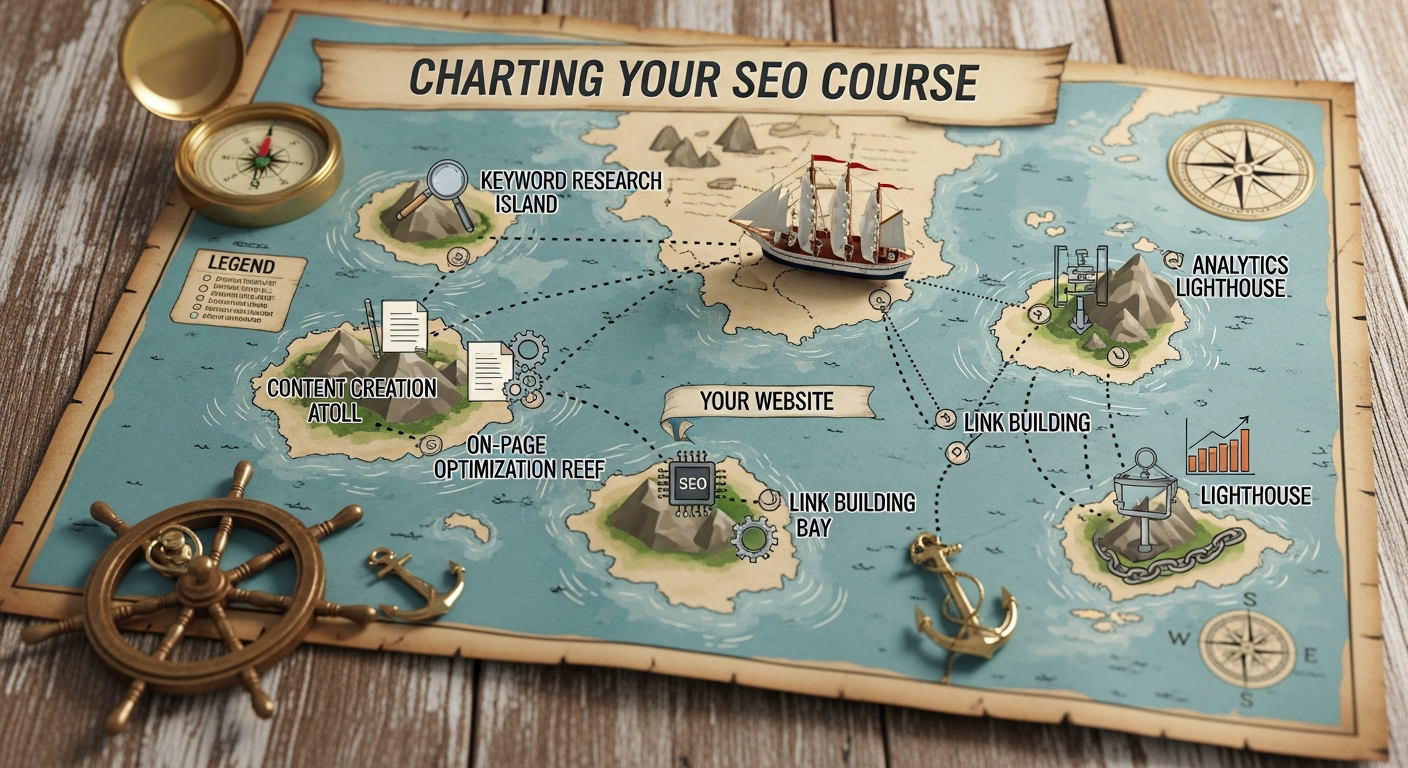
For a startup, SEO is a marathon, not a sprint. The most important step is to simply get started. Begin by focusing on the low-cost, high-impact strategies: conduct foundational keyword research, create valuable content that addresses customer pain points, and ensure your website is technically sound. These initial steps lay the groundwork for all future SEO efforts and help establish your site’s credibility in search engines. Even small, consistent improvements—like optimizing page titles, meta descriptions, and internal linking—can compound over time to generate meaningful results.
As you begin to see traction and generate revenue, you can reinvest in more advanced SEO services. This might include hiring specialized freelancers or agencies to tackle areas that require deeper expertise, such as technical audits, structured data implementation, or large-scale link-building campaigns. Whether you choose to work with a freelancer, a specialized agency, or an SEO coach, the knowledge you build by starting with a DIY approach will make you a much smarter buyer. Understanding the fundamentals allows you to evaluate proposals, track results, and make informed decisions about where to allocate resources for maximum impact.
By being strategic and resourceful, you can build a powerful engine for organic growth that will serve your startup for years to come. Over time, this approach not only drives more qualified traffic but also strengthens your brand’s authority and trustworthiness. Continuous monitoring, testing, and iteration ensure that your SEO efforts remain aligned with changing search engine algorithms, audience behavior, and market trends. By maintaining this disciplined, incremental approach, your startup can scale its digital presence efficiently, achieve sustainable visibility, and compete effectively against larger, more established competitors.
FAQs:
1. Why is SEO important for startups?
SEO builds long-term digital assets that generate organic traffic, improve brand visibility, and offer a high ROI compared to paid ads.
2. What are the main types of SEO services?
On-page SEO (content, keywords, internal links), off-page SEO (backlinks, digital PR, local SEO), and technical SEO (site speed, mobile-friendliness, site structure).
3. Can startups afford professional SEO services?
Yes. Freelancers, boutique agencies, and DIY/coaching models provide affordable, effective SEO solutions tailored to budget constraints.
4. What DIY SEO strategies can startups use?
Keyword research, creating high-value content, and optimizing Google Business Profiles are low-cost, high-impact strategies for early growth.
5. How long does it take to see results from SEO?
SEO is a long-term strategy; noticeable results often appear in 3–6 months, depending on competition and consistency of efforts.
6. How do I choose between a freelancer, agency, or DIY model?
Consider your budget, team expertise, desired level of hands-on involvement, and long-term growth goals when selecting an approach.
7. Are local SEO strategies worth it?
Yes, especially for startups serving specific geographic areas. Optimizing Google Business Profiles and local citations drives targeted, high-converting traffic.